Git qṃsistá (People Of The Moon Tipped Over/Month Of March)
image credit: Owen Perry
A collaboration between Kitasoo Xai’xais and Western scientists examining past, current, and future ways of stewarding relationships between people and Pacific herring.
Git qṃsistá (people of the moon tipped over): learning together to revitalize herring
Collaborators in this case study include the Kitasoo Xai’xais Marine Stewardship Authority (KXSA), the Hereditary Chiefs and community fishers that comprise the Kitasoo Xa’xais Marine Working Group (KXMWG), federal fisheries scientists, academics, and Oceana Canada. (For a list of participants, click here).
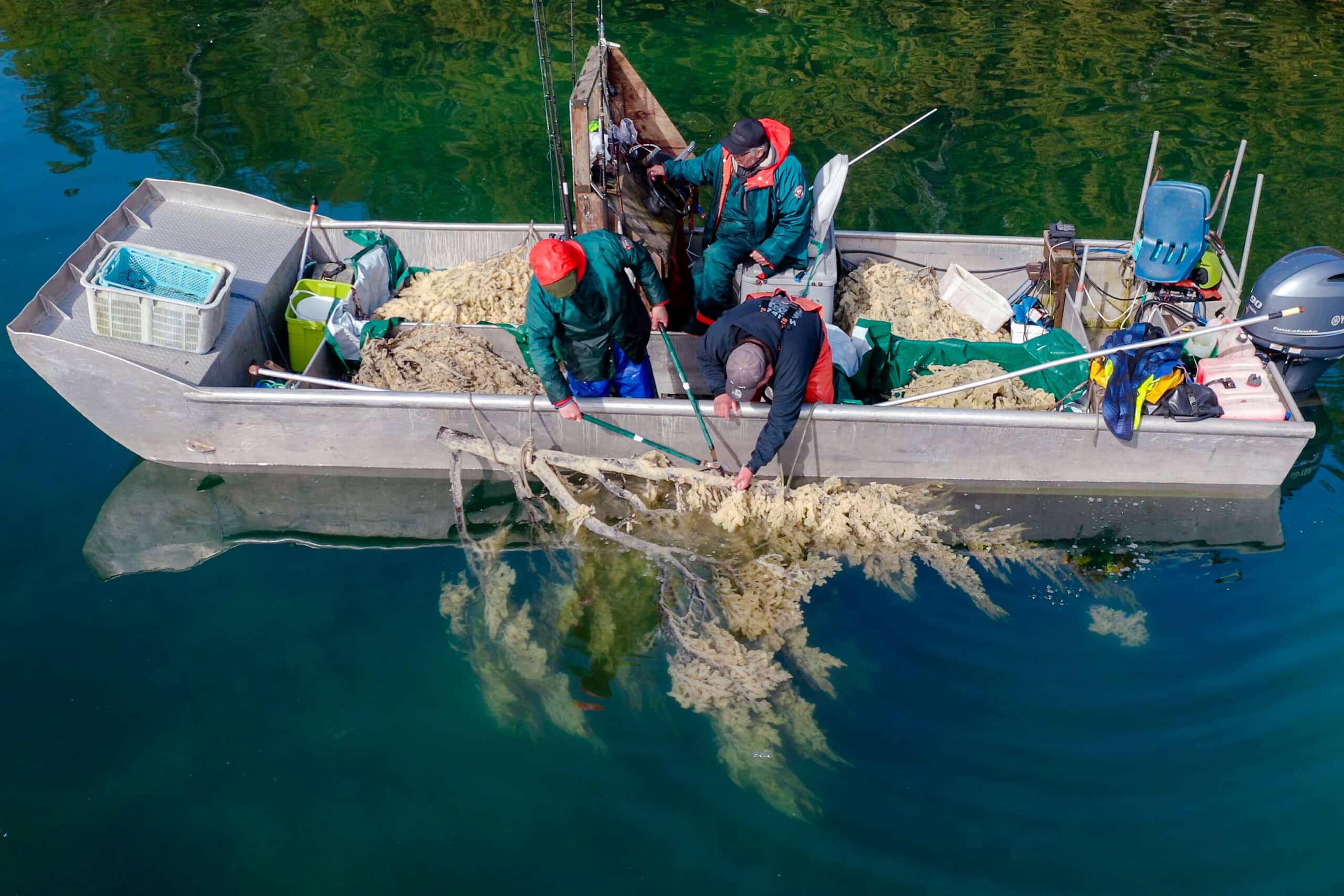
Kitasoo Xai’xais harvesters collecting herring spawn on hemlock. Photo by Moonfish Media
Who We Are
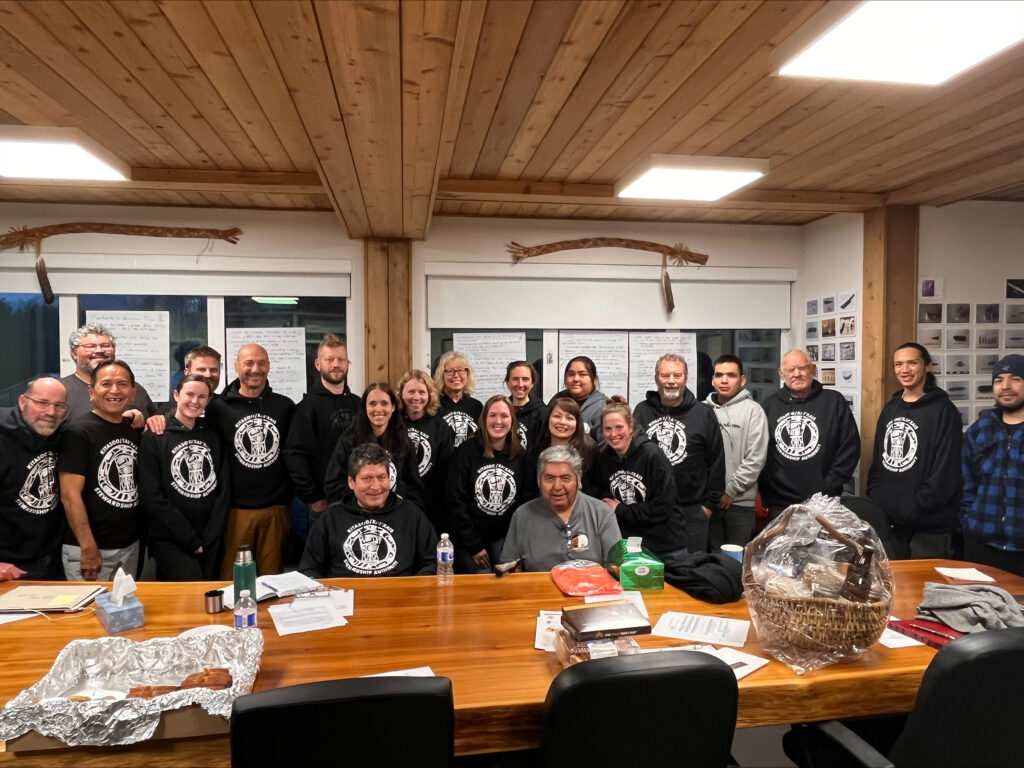
In 2023, we formed a working group that pairs Kitasoo Xai’xais traditional knowledge and Western science with the goal to inform the management of Pacific herring. The members of this collaboration—which includes Kitasoo Xai’xais, Fisheries and Oceans Canada (DFO), Oceana Canada, and academic collaborators—came together because of a shared understanding that the pairing of Indigenous and Western Knowledge Systems can strengthen social equity and fisheries sustainability. This project is also creating space for reconciliation between Kitasoo Xai’xais and Canada following decades of misconception in fisheries management within Kitasoo Xai’xais Territory.
Community members and project collaborators from KXSA, DFO, Oceana Canada, and Simon Fraser University meeting in Klemtu in 2023.
Why Herring?
Pacific herring—tska̱h in Sgüüx̱s (the language of the Kitasoo People) and wán̓ái in Xai’xais—have critical ecosystem roles. They are important prey for diverse species like groundfish, salmon, sea birds, and marine and terrestrial mammals. They also are key elements of the cultural practices of the Kitasoo Xai’xais and many other coastal First Nations. These practices include the harvest of herring eggs on hemlock branches (la̱xsmsxs’waanxduring in Sgüüx̱s, h̓ánt in Xai’xais), provision of traditional foods at Potlatches, field experiences for youth that focus on intergenerational knowledge transfer, and inter-Nation relationships through trade. Herring also generate economic revenue for Kitasoo Xai’xais with commercial spawn-on-kelp harvests.
A school of herring in Kitasu Bay. Photo by Moonfish Media
What We're Doing
Our team is working to document Kitasoo Xai’xais knowledge and practices, facilitate changes in how DFO manages herring and other fisheries, and revitalize herring populations in the territory.
Our work in Klemtu so far:
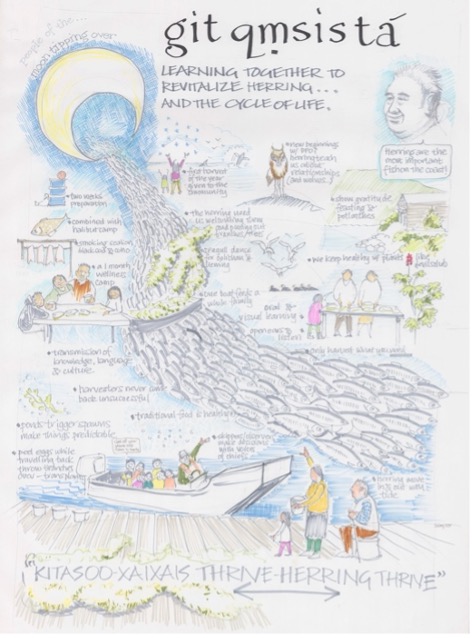
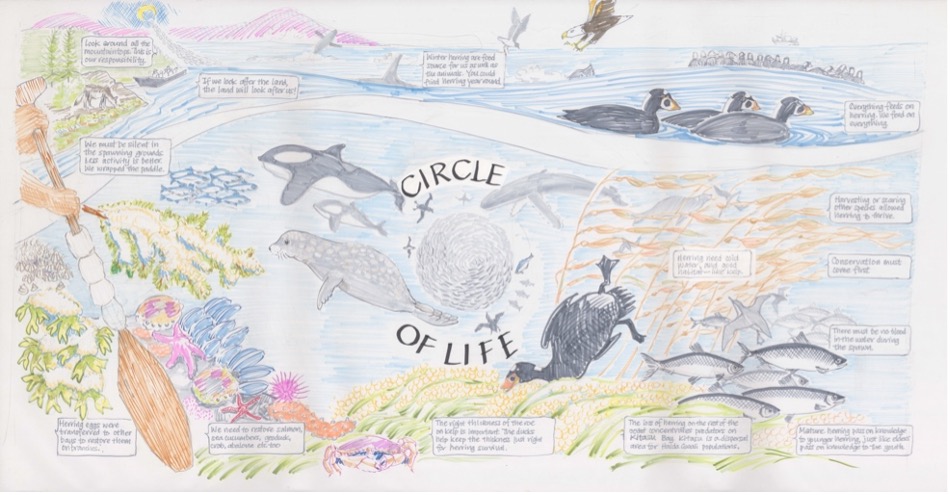
Workshops about Kitasoo Xai’xais stewardship principles and knowledge of the relationships between herring, people, and other species.
Interviews with knowledge holders about the history of herring and spawn-on-kelp harvest in the territory.
Visual summaries of the discussion from our herring workshop. Art by Briony Penn.
Our Upcoming Work in Klemtu
Transplanting hemlock with herring spawn from Kitasu Bay to restore areas that no longer have a spawn.
Organizing field trips to Kitasu Bay for youth and Elders before and during the herring spawn to facilitate intergenerational knowledge transfer.
Kitasoo Xai’xais Elders and project collaborators place herring spawn on hemlock into areas without a current spawn.
Advocating for the inclusion of Indigenous Knowledge Systems with Canadian policymakers and DFO directors.
Through our work on tska̱h/wán̓ái, we hope to make Canadian fisheries management more inclusive of Indigenous knowledges and demonstrate ways in which we can all work together to restore reciprocal and respectful relationships between people and the ocean.
This webpage is a living document, which we will update as the project develops.
Contact:
Sierra Hall, Research Associate, Kitasoo Xai’xais Stewardship Authority researchassociate@kxsa.ca
Christina Service, Wildlife Biologist and Science Coordinator, Kitasoo Xai’xais Stewardship research@kxsa.ca